

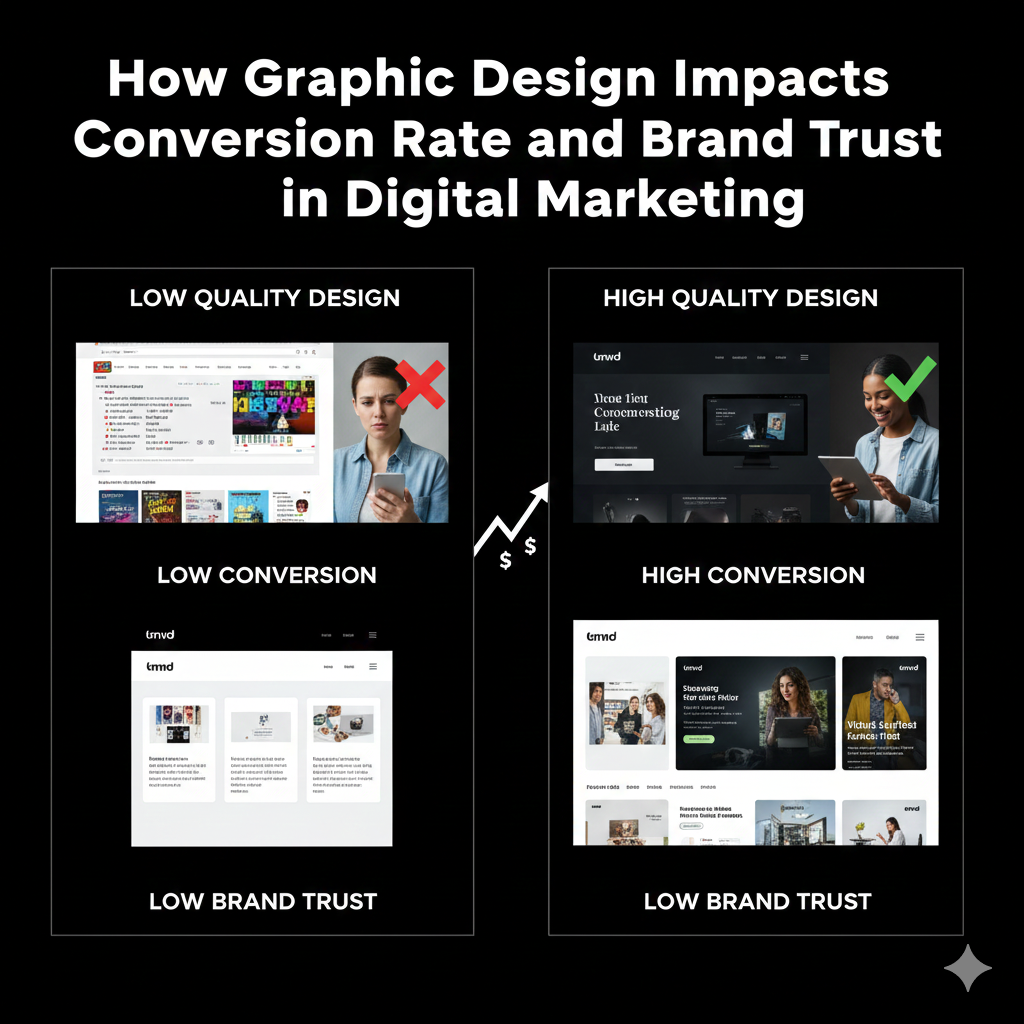
In digital marketing, first impressions don’t just matter — they often determine whether a potential customer stays, clicks, or leaves within seconds. Graphic design plays a critical role in shaping those decisions. From website layouts and ad creatives to social media visuals and email campaigns, strong design directly influences conversion rates and brand trust in ways that go far beyond aesthetics.
Visual Design as the First Point of Trust
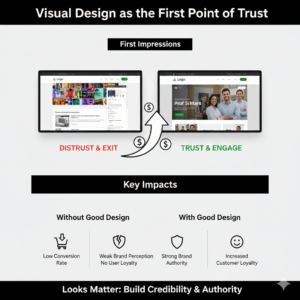
Before users read a single word of copy, they judge a brand visually. Clean layouts, balanced spacing, consistent colors, and professional typography send an immediate signal of credibility. Poor design, on the other hand, can trigger doubt — even if the product or service itself is solid.
Well-executed graphic design helps brands appear reliable, established, and intentional. In crowded digital spaces, this visual confidence becomes a shortcut for trust, especially when users are deciding whether to engage, sign up, or make a purchase.
How Design Influences Conversion Behavior
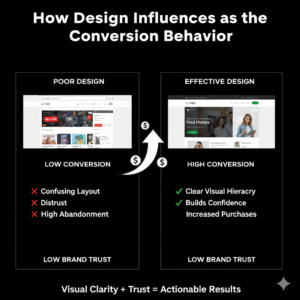
Conversion-focused design is not about decoration; it’s about guidance. Strategic use of visual hierarchy directs attention to key actions such as call-to-action buttons, signup forms, or product highlights. Color contrast improves readability, while spacing reduces cognitive overload, making decisions easier for users.
Elements like icons, illustrations, and imagery also help explain value faster than text alone. When users quickly understand what a brand offers and what action to take next, conversion rates naturally improve.
Consistency Builds Brand Recognition and Confidence
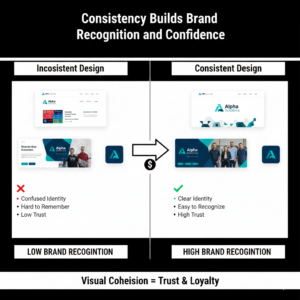
Consistency across digital touchpoints — websites, ads, landing pages, and social platforms — reinforces brand identity. When visuals align seamlessly, users feel a sense of familiarity, which lowers resistance and increases trust.
Brands that maintain consistent design systems tend to appear more professional and dependable. Over time, this consistency builds recognition, making users more comfortable returning, engaging, and converting again.
Emotional Connection Through Visual Storytelling
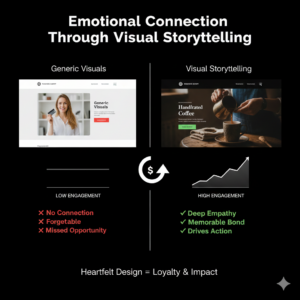
Graphic design also plays a key role in emotional engagement. Colors evoke moods, typography sets tone, and imagery tells stories without words. When design aligns with brand values and audience expectations, it creates a deeper emotional connection — one that influences purchasing decisions on a subconscious level.
In digital marketing, where attention spans are short, visuals that resonate emotionally often outperform purely informational content.
Design and Perceived Value
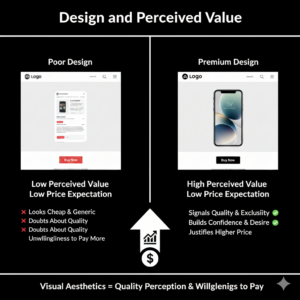
Professional design elevates perceived value. A well-designed landing page or ad can justify pricing, improve brand positioning, and differentiate a business from competitors offering similar products. Users are more likely to trust — and pay for — brands that look refined and thoughtfully crafted.
This perceived value is a powerful driver of conversions, especially in competitive markets where trust must be earned quickly.
Final Thoughts
Graphic design is not just a creative asset in digital marketing — it’s a performance tool. When done right, it builds trust, clarifies messaging, and removes friction from the user journey. Brands that invest in thoughtful, conversion-driven design consistently see stronger engagement, higher conversion rates, and deeper customer loyalty.
In a digital-first world, design isn’t optional — it’s strategic.